I recommend a visit the museum of stained glass at Ely Cathedral where artists and work are displayed in chronological order and Vitreosity blog which offers excellent articles about contemporary stained glass.


Rocce vitree venivano gia’ utilizzate in epoche primordiali, raccolte in natura specialmente in zone vulcaniche e spaccate in forme utili per la realizzazione per i primi attrezzi da lavoro o armi.
La produzione di vetro sia ha sin dal III millennio a.C. Dove ancora non veniva soffiato ma colato in forme. Nell’epoca bizantina già si conosceva la tecnica della soffiatura dove veniva utilizzata per ampolle o vasi mentre i coperchi venivano ancora ottenuti per fusione in forme.
Glassy rocks such as Obsidian were used during pre-history and were often collected from volcanic areas and sometimes a good distance away. They could be split and the sharp edges were used for the first hunting and construction tools, as well as for weapons.
The production of glass began in the third millennium BC, when molten glass was poured into moulds It wasn’t until the Byzantine era, that the technique of blowing glass was used. This enabled glass to be used for vials, jars and lids.
The first time glass was used for windows, that is to close openings in a building and still permit light to enter, was not until the Romans era. Then it was poured into moulds making thin tiles, which were then embedded in a wooden or stone frames.
From the first century AD, lead began to replace the wooden and stone frames that held the glass in place. Because of its malleability, lead could be used to make a more subtle frame.
From the V century onwards, (the Basilica of Maccabees, in Lyon), stained glass began to take on a narrative function for religious scriptures, bringing their message to a mostly illiterate population.
Sin dal V secolo d.C. (basilica di Maccabei Lione) la vetrata assume una funzione narrativa delle sacre scritture per una popolazione pressoché illetterata.
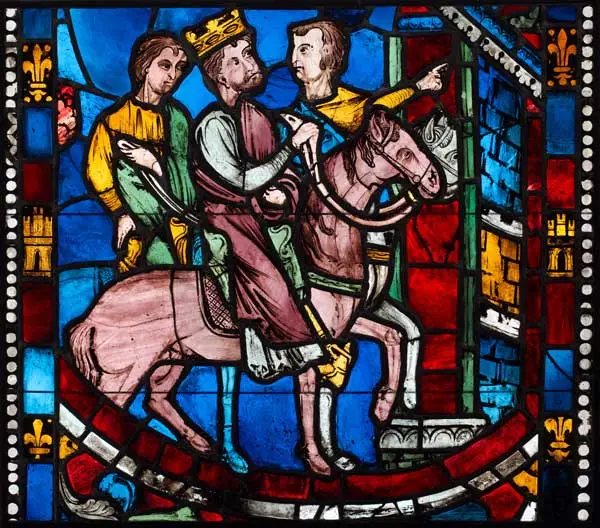
Stained glass use continued to expand, through the Middle Ages, especially for the decoration of churches and basilicas. It became considered as divine: to turning towards the heavens and look at God.
This technique continued to be developed up until the XIII Century AD, at which point stained glass began to show its great capacity for expression. The first examples of stained glass we have were thanks to the work of archaeologists. The head of Christ was found in the 1930s, in the Lorsch Abby and dates from the the IX Century.
From the XII Century windows got bigger as cathedrals, such as Chatre, with its famous windows dating from 1140, begin to be constructed in Europe.
At this time the windows had a totally narrative function and were composed of a multitude of individual images that told of the life of Christ, or a story from the scriptures and they were surrounded by a decorative frame. This model would last for more than a century.
Many of the examples of medieval stained glass have not managed to maintain their original appearance. There is often some deterioration to the glass, due to weather damage and poor restoration in later centuries.
It was during this period that stained glass began to loose its rectangular shape and take on the many forms that are dictated by Gothic architecture, rose window and accentuated arches, composed of small windows of various shapes.
It was also during this period that one of the largest collections of stained glass windows was constructed, those at Sainte Chapelle – built to house the relics of the Passion of Christ.
Questa tecnica continuerà a svilupparsi e sin dal XIII secolo d.C. la pittura su vetro avrà’ ottenuto già’ una eleva capacita’ espressiva. I primi frammenti di pittura su vetro si hanno grazie al lavoro degli archeologi e spesso in epoche non tanto moderne e con mezzi non tanto adeguati, nel 1930 vine rinvenuta nella abazia di Lorsch una testa del Cristo databile al IX secolo.
Dal XII secolo le dimensioni delle vetrate si ingrandiscono in funzione alla costruzione delle cattedrali europee come le famose vetrate della cattedrale di Chartre 1140.
In questa epoca le vetrate hanno una totale funzione narrativa e sono composte da una moltitudine di singole immagini che narrano la vita di Cristo di un santo o qualche altra sacra scrittura e attorniate da cornici decorativa, Questo modello durerà’ per più di un secolo.
Le vetrate artistiche medievali però non mantengono completamente l’aspetto originale, questo spesso per il deterioramento del vetro, per l’opera di corrosione dovuta dagli agenti atmosferici o anche per mano di qualche non adeguato restauratore che è subentrato nei secoli successivi.
E’ anche che in questo periodo che la vetrata artistica abbandona la classica forma rettangolare per prendere svariate forme dettate spesso dall’architettura gotica, rosoni o archi accentuati composti da piccole vetrate di varie forme.
E’ di questa epoca la costruzione di una delle più grandi collezioni di vetrate al mondo, la Sainte Chapelle 1242-1248 costruita per ospitare le reliquie della Passione di Cristo.

Discover the work of Iko Studio in the restoration and conservation of stained glass windows.

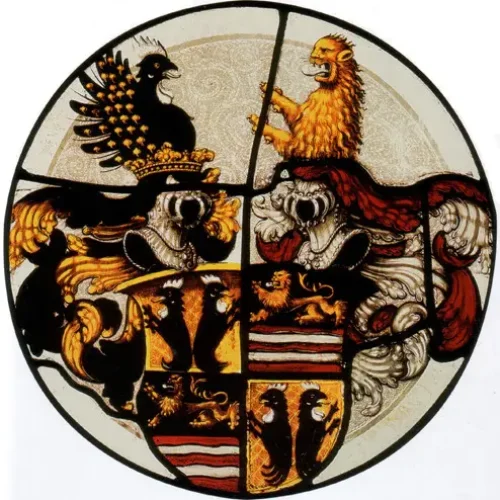
The use of stained glass continued to expand and the style of stained glass began to move closer to that of painting on walls and canvases. It was the first time that the glass makers and the many teachers began to come out of anonymity, and were recognised as artists. These artists offered their services to the royal courts and because of this we have documentary evidence of their names and works. There were artistic exchanges and ideas and techniques spread amongst artists in Europe. With advent of Van Eyck, painting on glass began to be influenced by the Flemish style, with the compositions becoming more unified, the colours brightener, and the painting on glass more detailed too.
Meanwhile in Italy, the trends in stained glass styles follows that of the early Renaissance Masters, and artists were often called upon to create stained glass designs.
In the XVI Century, the evolution of stained glass art stopped abruptly due to a profound religious crisis that rocked northern Europe, particularly England. The Protestant Reformation saw a large number of medieval windows destroyed at the hands of the Government. We also began to see stained glass, which had previously been regarded as a strictly religious art-form, appear in stately homes and government buildings. Heraldry was a common subject.
Having been abandoned due to religious wars in Northern Europe and the French Revolution, the IX Century sees a renewed interest in the stained glass movement.
The Gothic style, favoured by architects such as Pugin became popular and studios such as Hardman and Co, began designing windows. A few years after this revival, the English studio Morris and Co. made an important impact on the stained glass world bring classic styles from the past, but this time at the hand of painter Edward Burne Jones, who was heavily inspired by the Italian Renaissance, and produced some fantastic works.
This led to new influences being able to take hold later. It was also a period of technological advances and the creation of new types of glass becoming available such as opaque glass which used several overlapping layers to produce an opalescent appearance. In 1893, an exhibition in Chicago launched the Louis Comfort Tiffany style that is credited with bringing landscapes into the window and bringing the stained glass into everyday objects, such as the famous Tiffany lamps.
During the Second World War, a large amount of medieval stained glass and glass of special importance was removed from buildings and put into safe storage, but most of the pieces that remained in place were destroyed by the bombings and were later replaced with modern windows.
At this time the window begins to enter into a new experimental phase and at the end of the 1950s, Matisse is tasked with the creation of windows for a monastic chapel in Vence (France). Its windows were inspired by his paintings: simple painting, simple shapes and bright colours.
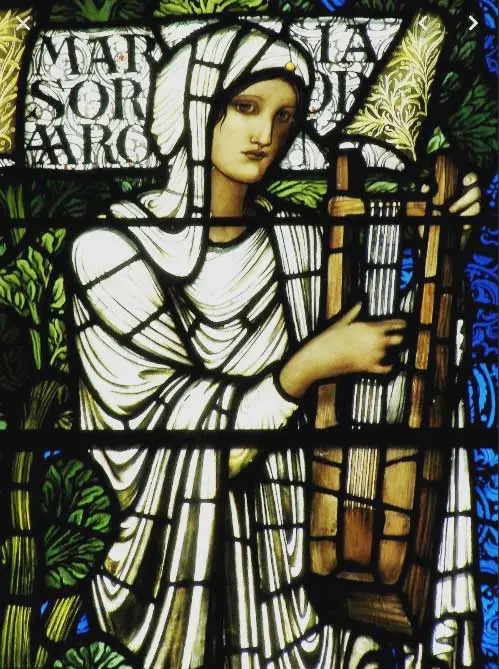
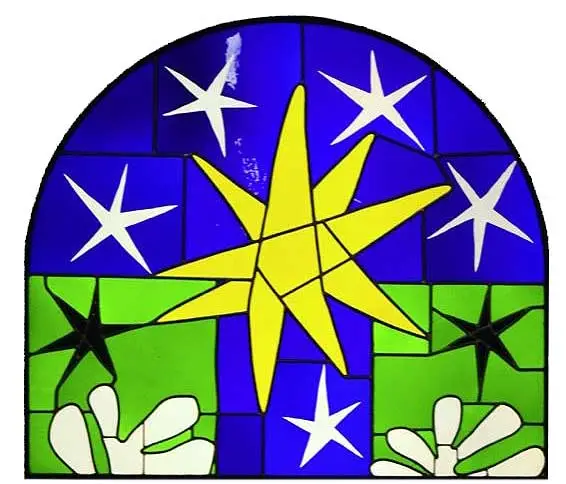

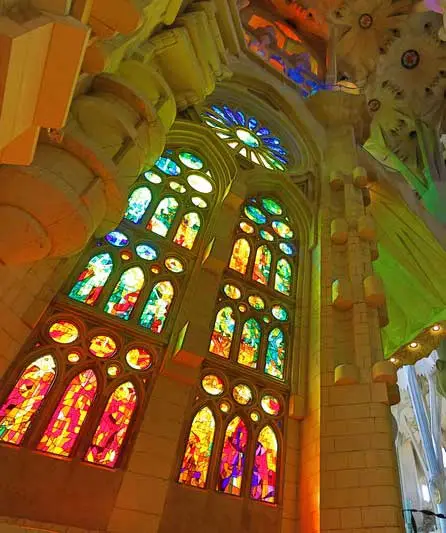

Stained Glass has, in recent years, undergone yet another renewal. All the rules have been pushed aside and glass has come to be seen as a great light filter, softening and colouring it with pigments achievable only through modern chemistry. Glass has been inserted organically in to contemporary and modern buildings, including public buildings, where the steel and reinforced concrete supporting structures leave large voids to be filled with tinted glass.
In cases like this the glass becomes a link between the building’s interior and exterior. Opening the door for abstract forms and new painting effects that have no relation to the styles described above.
One noteworthy, contemporary stained glass artist is the American Ed Carpenter. He has revolutionised the art of stained glass and his works have a powerful visual impact. The circuitry designs, often resembling computers, no longer give a passive role to the sun’s light, instead the glass acts a prism casting unexpected patterns and reflections on the floor and walls surrounding the window.
The English artist, Brian Clarke, with his repeated geometric shapes and random bright colours is also of note. Among his most important works are the canopy of the Victoria Quarter in Leeds (England), more than seven hundred square metres divided in to squares and irregular shapes, have their lines broken by the regular geometry of the glass plates .
I recommend a visit the museum of stained glass at Ely Cathedral where artists and work are displayed in chronological order and Vitreosity blog which offers excellent articles about contemporary stained glass.